Full analysis of Bitcoin bargain hunting signals: Strategy’s crazy increase in positions, CME volatility futures are online, is the worst moment really over?
In June 2026, Bitcoin fell from its all-time high of $126,000 in October last year to $63,000, halved. Retail investors were panic-stricken, but Michael Saylor’s Strategy bought 1,550 BTC in a week, and even made a bold statement that even if BTC fell to $30,000, there would be no need to sell coins. At the same time, CME launched the world’s first Bitcoin volatility futures, and two institutions have already placed bets; key market indicators began to send “bottom” signals; gold fell below the 200-day moving average, and funds may return to risky assets.
The author has been in the crypto market for nearly ten years, experienced the ice age in 2018, the 312 plunge in 2020, and the FTX crash in 2022, and has an instinctive sense of the “bottom” of Bitcoin. In today’s article, the author puts together these scattered pieces of information into a complete decision-making map of bargain hunting from the perspective of an experienced trader.
1. After Halving: Panorama of Bitcoin’s Current Market
Let’s look at the data first. As of June 9, 2026, Bitcoin price was $63,262, market value was $1.27 trillion, and 24-hour trading volume was $35.8 billion. From the ATH (all-time high) of $126,080, the drop is about 49.8% – a decent halve.
But cutting in half does not mean bottoming out. In the 2017-2018 cycle, BTC fell from 20,000 to 3,100, a drop of 84%; in the 2021-2022 cycle, BTC fell from 69,000 to 16,000, a drop of 77%. If according to historical rules, this time it “only” dropped 50%, it may be too early to say it has bottomed out.
However, the market structure has undergone qualitative changes:
1. The degree of institutionalization is far greater than before. After the BTC spot ETF was passed in January 2024, Wall Street capital officially entered the market. The asset size of BTC ETFs managed by BlackRock, Fidelity, and Invesco exceeded $120 billion at its peak. Although there are also net outflows from ETFs in this round of decline, the overall holdings are still much higher than in 2022.
2. Micro-Strategy has become the “Dinghai Shengpin”. As of now, Strategy holds more than 580,000 BTC, with an average purchase cost of about $65,000—that is, the current price is already lower than the average price of its holdings. But Saylor himself said in a new interview that even if BTC fell to $30,000, Strategy would not need to sell any Bitcoin because the company’s debt structure is healthy enough.
3. The market value of stablecoins is still high. USDT has a market cap of $186.8 billion, USDC $76 billion, for a total of over $260 billion – an approximate measure of the “ammunition” on the market. At the end of 2022, the total market value of stablecoins was less than 150 billion. With more ammunition, the potential for rebound naturally increases.

2. Strategy’s crazy increase in positions: What are the smart money doing?
In the first week of June 2026, Strategy did two seemingly contradictory things: first it sold $2.5 million in BTC, and then bought 1,550 BTC (worth about $100 million). This kind of “sell small and buy big” operation, I understand as pure liquidity management – selling a small amount of BTC to repay short-term debt, while continuing to add positions at a lower price.
What deserves more attention is Strategy CEO’s statement: Even if Bitcoin falls to $30,000, the company will not be forced to sell. The significance of this sentence is not whether the number of 30,000 is accurate, but that it sends a signal-the structural resilience of institutional positions is far stronger than the market imagines.
The author recalls that at the end of 2022, when the market was at its most panicked, everyone was guessing “whether the micro strategy would explode.” The result? It survived and increased its holdings crazily in 2023-2024, becoming the largest listed company holder of BTC. Now the same script is playing out – the market is worried about “whether it will continue to fall after being cut in half”, but Saylor is buying against the trend.
History does not simply repeat itself, but it always rhymes.
Other smart money moves
– Bybit promotes tokenized U.S. stock IPO: Bybit is vigorously promoting tokenized U.S. stock IPO, directly challenging Wall Street. This means that crypto exchanges are moving from “currency-to-crypto trading” to “all-asset trading”, and the narrative level is very high.
– Bitmine bargain-hunting ETH: Bitmine conducted its largest ETH purchase in 2026, indicating that institutions are not only looking at BTC, but are also planning for ETH’s oversold rebound.
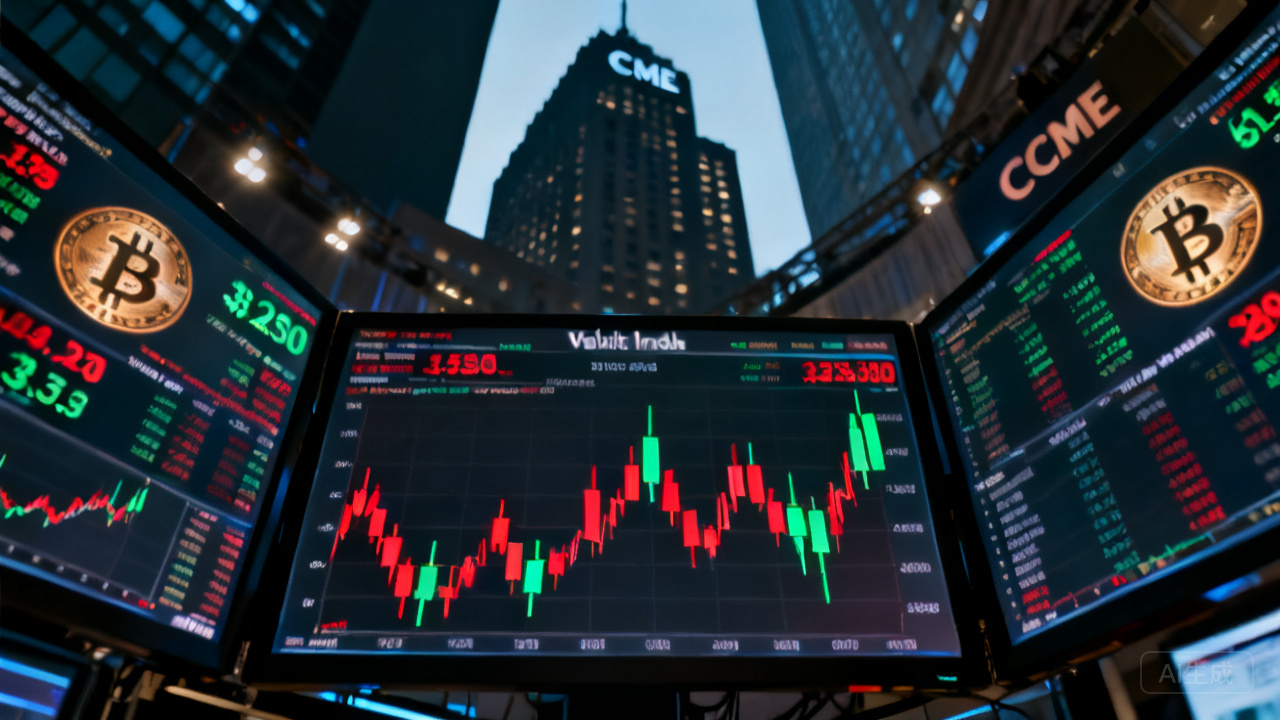
– CME Volatility Futures: The Chicago Mercantile Exchange (CME) has launched Bitcoin volatility futures, allowing traders to bet on BTC’s volatility rather than its price direction. Two institutions have already placed their bets. This is an important infrastructure milestone – the emergence of volatility derivatives means that the market’s pricing of BTC is moving from “directional gambling” to “systemic risk management.”
3. List of bottom signals: What are these indicators saying?
The author has compiled the 5 most watched bottom signals in the current market and dismantled them one by one:
1. MVRV Z-Score
The MVRV Z-Score measures the deviation between market value and realized value. Historical Lesson: When the Z-Score falls below 0, it is usually in cyclical bottom territory. The current Z-Score is around 0.8, which has not yet hit the bottom, but has fallen sharply from the high and entered the “reasonably undervalued” range.
Author’s judgment: Not the absolute bottom, but no longer expensive. If you are a fixed investment player, you can start building positions in batches from this position.
2. Puell Multiple
Puell Multiple = Daily miner income / 365-day moving average miner income. Below 0.5 usually means miners are shutting down at a large loss and the market is in a state of extreme panic. The current Puell Multiple is about 0.7. Miners are having a hard time but it has not yet reached the point of “mining disaster”.
Author’s judgment: Need to continue to observe. If BTC falls below 55,000, the Puell Multiple may fall below 0.5, which will be the real “miner capitulation” signal.
3. Realized Price
The realized price represents the average cost of all BTC at the time of their last on-chain move. The current realized price is around $42K – meaning the average cost to long term holders is $42K. If BTC fell to this level, it would be a true “market-wide loss.”
The author’s judgment: The current price of 63K is much higher than the realized price of 42K, and the market as a whole is still profitable. It’s not a bottom feature, but it’s not a top feature either – somewhere in the middle.
4. 200 Week Moving Average
The 200W MA is Bitcoin’s most classic long-term support line. Historically, BTC has hit or briefly dipped below the 200W MA in every bear market before rebounding. The current 200W MA is around $52,000.
Author’s judgment: If BTC falls to around 52K and rebounds with heavy volume, it will be a textbook-level bottom-buying signal. There is currently about 18% room to reach the 200W MA.
5. Panic and Greed Index
The current Panic and Greed Index is around 25 (extreme panic). Historically, the median 12-month return when the index was below 20 was over 100%.
Author’s judgment: The panic index is a reverse indicator. The more panic there is, the more likely it is a good buying point. 25 is scary enough, but not quite as extreme as 5-10 at the end of 2022.
Comprehensive judgment
| 指标 | 当前值 | 底部信号 | 评分 |
|——|——–|———|——|
| MVRV Z-Score | ~0.8 | < 0 | 🟡 接近 |
| Puell Multiple | ~0.7 | < 0.5 | 🟡 接近 |
| 已实现价格 | ~42K | BTC 跌至该水平 | 🔴 未触发 |
| 200W MA | ~52K | BTC 跌至该水平 | 🔴 未触发 |
| 恐慌指数 | ~25 | < 20 | 🟡 接近 |
Conclusion: 0 out of 5 indicators are fully triggered, 3 are close, and 2 are far away. This is not an “iron bottom”, but it is already the edge of the “reasonable bottom area”. If you are a long-term investor, the author’s suggestion is – don’t try to get to the absolute bottom, build positions in batches in the 60K-65K range, and increase the position if it falls to 52K. **

4. Macroeconomic environment: inflation, interest rates and capital flows
Bitcoin does not exist in isolation, and its price trends are highly correlated with the macro environment.
US inflation continues to be high
In the first half of 2026, U.S. CPI data were repeatedly higher than expected, and the market’s expectations for the Federal Reserve’s interest rate cut were postponed from “June rate cut” to “December rate cut” or even “2027.” 10xResearch pointed out in the latest report that the real reason for BTC’s decline is rising inflation, not Strategy’s leverage risk. ** The author deeply believes this – many self-media attribute the decline of BTC to Saylor’s “liquidation risk”, but the fact is that inflation is the fundamental driving force.
European Central Bank interest rate decision
The European Central Bank will announce its interest rate decision this week, and market expectations remain unchanged. But if the ECB unexpectedly cuts interest rates, it will boost global risk asset sentiment, and BTC will also benefit.
Gold falls below 200-day moving average
One signal to watch: Gold prices fell below the 200-day moving average. This means safe-haven assets are also under pressure. Under traditional logic, gold and BTC are negatively correlated (gold falls → funds flow into risky assets → BTC rises), but the two once strengthened simultaneously in 2024-2025. Today’s divergence may suggest that funds are being reallocated away from all “highly valued assets” in anticipation of new catalysts.
Space IPO and liquidity shock
SpaceX and Anthropic IPOs are also in the works. This ultra-large IPO will drain liquidity from the market and put pressure on all risk assets (including BTC) in the short term. However, after the IPO is completed, the “new funds” from the end of the lock-up period may return to the encryption market.
5. CME Volatility Futures: An Undervalued Milestone
CME’s launch of Bitcoin volatility futures carries more weight than meets the eye.
Why?
1. Volatility Futures = Institutional confirmation of BTC pricing power. You wouldn’t develop volatility derivatives for an “unimportant asset”. The launch of this product by CME shows that Wall Street believes that BTC’s volatility is a financial variable “worthy of trading” – which in itself is a recognition of BTC’s asset status.
2. Lower the threshold for short selling. In the past, shorting BTC volatility required a complex option combination, but now you can just buy futures directly. This means that volatility will be “smoothed out” more quickly – and the duration of extreme moves may be shortened.
3. Attract traditional hedge funds to enter the market. Many quant funds only trade CME-listed products. The launch of volatility futures opened a door for these funds.
Author’s Prediction: Within 6-12 months, the daily trading volume of CME BTC volatility futures may exceed that of BTC futures themselves – just like VIX futures in traditional markets. This will further reduce the extreme volatility of BTC, making a “slow bull” market more likely to occur.
6. The “Second Growth Curve” of Tokenized U.S. Stocks and Crypto Exchanges
Bybit is vigorously promoting a tokenized US stock IPO. This is not a small news.
Logical chain:
– The core competitiveness of crypto exchanges is “24/7 trading + globalization + low threshold”
– Tokenized U.S. stocks extend these advantages to traditional securities markets
– Users do not need to open a brokerage account or comply with T+1 settlement rules to trade Apple and Tesla stocks
– This means that the TAM (Accessible Market) of crypto exchanges expands from 3 trillion (crypto market) to 100 trillion (global securities market)
Binance is doing the same thing – Binance’s tokenized US stocks (Stock Tokens) already support many popular stocks. This is not an isolated case, but a trend.
Impact on BTC: The boom in tokenized US stocks will bring a large number of new users into the crypto ecosystem, and the first step for these users is usually to buy BTC and ETH. A rising tide lifts all boats, and BTC will definitely benefit.
7. Strategic Suggestions: Dips-up Roadmaps for Different Investors
Activist investors (high risk appetite)
– 60K-65K range: 30% position opening
– Near 52K (200W MA): Increase the position to 60%
– Around 42K (realized price): Full position
– Stop loss line: 35K (50% Fibonacci retracement level of this cycle)
Steady investor (risk preference)
– Below 55K: Start fixed investment, invest 20% of the total plan every month
– Around 52K: Accelerate fixed investment to 40% per month
– Don’t pursue the lowest point, trade time for space
Conservative investors (low risk appetite)
– Wait for at least 3 bottom indicators to trigger completely before entering the market
– Prioritize BTC ETFs (such as IBIT, FBTC) rather than holding coins directly
– No leverage, no contracts
The author’s own operations
To be honest, the author has already established his first position near 65K – accounting for 15% of the total plan. The reason is simple: I cannot predict the lowest point, but I know that 60K-65K BTC will most likely be a good investment in 3 years. If you are still hesitating, the author’s suggestion is – don’t wait, build a bottom position first, and then increase the position according to the market rhythm. It’s not scary to miss the lowest point, but it’s scary to miss the entire bottom range.
8. Risk warning: You still need to be vigilant about these black swans
1. Strategy Leverage Risk: Although Saylor said that 30K will not be sold, if BTC continues to fall and its convertible bonds are downgraded by rating agencies, it may trigger a chain reaction.
2. Regulatory Black Swan: The SEC’s regulatory storm over the crypto industry is not over yet. If a new crackdown targets DeFi or stablecoins, it could trigger panic selling.
3. Runaway Inflation: If US inflation persists above 4%, the Fed may be forced to raise rates rather than cut them, which would be a disaster for all risk assets.
4. Geopolitical Risks: The global geopolitical situation continues to be tense, and black swan events may break out at any time.
5. Technical Risk: Although the BTC network itself is extremely secure, vulnerabilities in second-layer solutions such as the Lightning Network and side chains may affect market confidence.
FAQ: 10 questions that newbies are most concerned about
Q1: Can Bitcoin hit the bottom now?
A: Judging from multiple bottom indicators, it is currently on the edge of the “reasonable bottom area”, not an absolute bottom. Long-term investors can start to build positions in batches, but it is not advisable to fill the position all at once.
Q2: Will Strategy be liquidated?
A: According to Strategy’s latest disclosure, its debt structure is healthy enough that there is no need to sell even if BTC falls to 30K. But this is a dynamic situation that requires ongoing attention.
Q3: What impact will CME volatility futures have on retail investors?
A: The direct impact is not big, but the indirect impact is far-reaching – it will reduce the extreme volatility of BTC, make the market more “mature”, and reduce the market price.
Q4: How much further will Bitcoin fall?
A: No one can predict accurately. But the 200-week EMA (around 52K) and the realized price (around 42K) are two key support levels. A drop below 42K would be extreme.
Q5: Which one is more worth buying, Ethereum or Bitcoin?
A: BTC is “digital gold” and is suitable for conservative allocation; ETH is the “world computer” and is more flexible but also more volatile. Newbies recommend a ratio of 70% BTC + 30% ETH.
Q6: How much leverage should be used for bargain hunting?
A: The author’s suggestion is – No leverage. Buying the bottom itself is operating against the trend, and adding leverage is adding countertrend to the trend, and you will have a narrow escape.
Q7: What is the relationship between tokenized US stocks and BTC?
A: Tokenizing U.S. stocks will attract new users into the crypto ecosystem, and the “first stop” for these users is usually BTC. In the long term, this is an increase in the demand side of BTC.
Q8: Is inflation good or bad for Bitcoin?
A: Short-term negative (postponement of interest rate cut → strengthening of US dollar → BTC under pressure), long-term positive (depreciation of legal currency → strengthening of BTC’s “digital gold” narrative). It’s a matter of time frame.
Q9: Should I buy BTC ETF now or buy the currency directly?
A: If you are in the United States or have compliance channels, BTC ETF is more convenient and has better tax benefits. If you are in other regions, it is more flexible to buy coins directly. Both have the same support effect on BTC prices.
Q10: How is this bear market different from 2022?
A: The biggest difference is the degree of institutionalization – there was almost no traditional financial capital in the crypto market in 2022, and now BTC ETFs manage hundreds of billions of dollars in assets. This means that the probability of an “illiquidity crash” is greatly reduced.
Risk warning
This article does not constitute investment advice. The cryptocurrency market is extremely volatile. Please fully understand the risks before investing and only invest money that you can afford to lose. The author holds BTC and ETH positions and has a conflict of interest. Past performance is not indicative of future earnings.
Conclusion
Bitcoin, which has halved, is very much like what it was like at the end of 2018 and 2022 – panic is spreading, bottom signals are looming, and smart money is quietly entering the market. But history does not simply repeat itself, and every “buying the dip” is accompanied by uncertainty.
What the author can do is to spread out the data, explain the logic clearly, and explain the risks thoroughly. As for whether or not to pull the trigger, that’s your decision.
Remember: In the crypto market, the four most expensive words are “wait and see” and the four cheapest words are “build positions in batches.”
Related reading (must read for newbies)
– OKX complete tutorial on registration and trading
– Beginner’s Guide to Cryptocurrency
– Coin Speculation Security Manual: How to Protect Your Digital Assets
– The whole process of buying coins for newbies: from registration to the first transaction
OKX registration invitation link: [To be filled in]
Binance registration invitation link: [To be filled in]
Reference:
1. CoinGecko Bitcoin Market Data
2. Strategy (MicroStrategy) BTC Holdings
3. CME Bitcoin Volatility Futures
4. 10xResearch: Bitcoin Inflation Analysis
5. Glassnode On-Chain Analytics